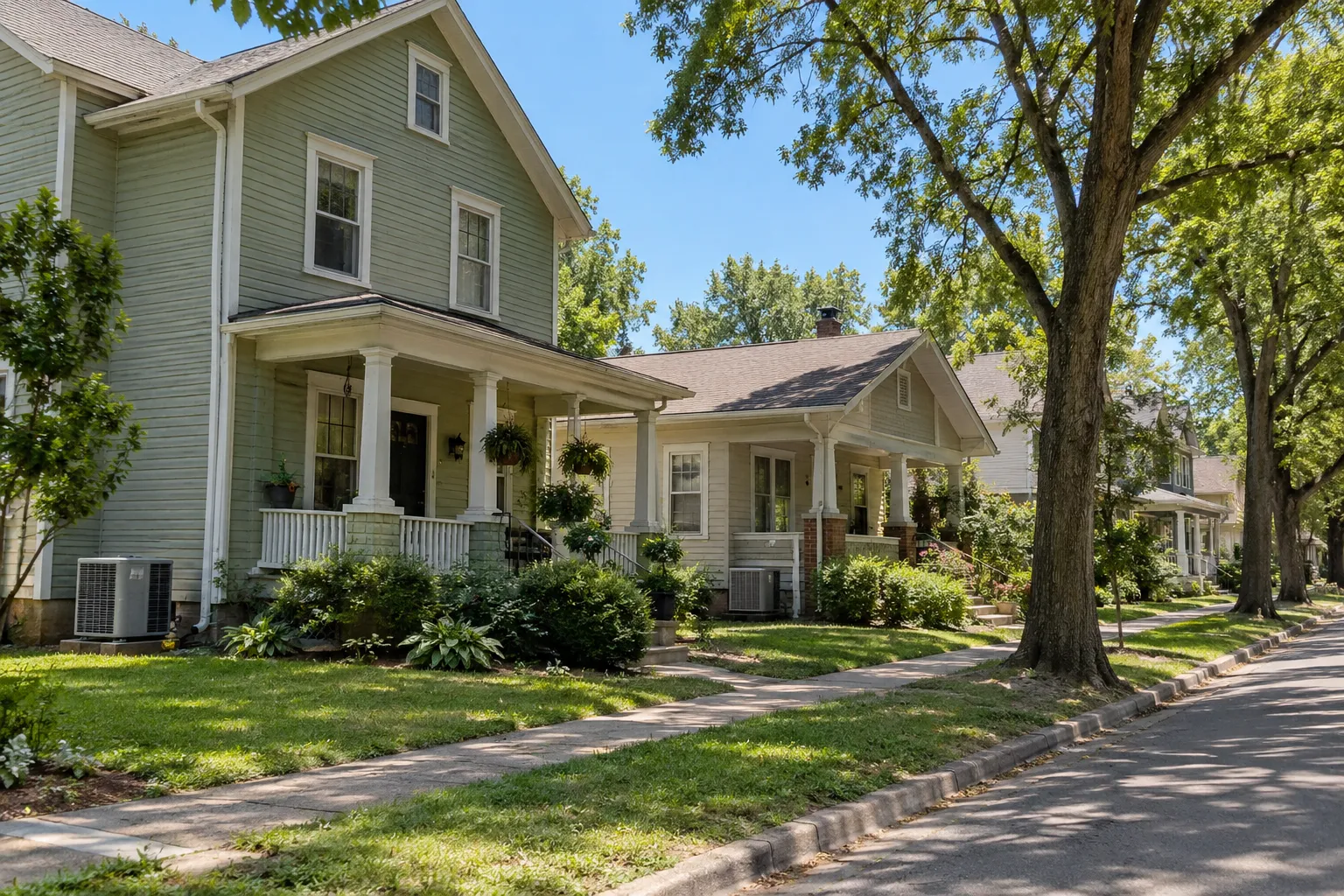
Need ac repair in Dayton?
Send a request through the form or email contact@districtssequence.property. Tell us what is wrong, and a provider in our network can follow up with an estimate.
No obligationAC repair and heating help across the Dayton area
Request an estimate first
Districtssequence Heating & Air is a referral service. We do not repair air conditioners. We connect homeowners in Dayton and the Dayton area with independent providers in our network who handle AC repair.
This page works like a checklist. First, you check a few simple things at home. Next, you note what the system is doing and when it started. Then you request an estimate and compare written quotes. Hot, humid summers put heavy strain on cooling systems, and storms can add damage on top. Timing changes outcomes, because a small fault left running can grow into a larger repair. Providers set their own hours, prices, and schedules, so availability varies. Requesting an estimate carries no obligation. You decide who to hire, and you decide when.
Run this list before you ask for help. It takes about five minutes.
1. Set the thermostat to cool. Lower it a few degrees. 2. Check the breaker panel for a tripped switch. 3. Look at the air filter. Swap it if it is clogged. 4. Clear leaves and debris from around the outdoor unit. 5. Look for ice on the indoor coil or the copper line.
If none of these help, stop there. Do not open panels or touch wiring.
Some signs mean you should turn the system off and seek help soon:
Request a callback to check provider availability. Many providers can respond quickly to emergency AC repair requests, but hours vary by provider.
Timing changes outcomes. A small fault grows when the system keeps running. Here is a rough timeline.
Note what you see and hear. If the unit short-cycles or ices up, turn it off at the thermostat. Running a frozen coil can strain the compressor.
Close the blinds. Use fans. Keep doors shut to hold the cool air in. In humid weather, indoor moisture climbs fast. Watch for damp air and a musty smell.
A frozen coil melts into the drain pan. A clogged drain can then overflow. In a basement or utility closet, that water can reach floors and drywall. Stuffy rooms also get hard to sleep in, especially for young children, older adults, and pets.
A weak capacitor can wear out a motor. A slow refrigerant leak can end with a damaged compressor. A repair that started small can turn into a much larger quote.
Severe thunderstorms and hail can bend outdoor coil fins. Power surges can harm control boards. Spring flooding can reach equipment that sits low. After any storm, ask the provider to check for hidden damage. Some policies may cover sudden damage, so check your policy. Providers can often help document damage for a claim.
Note which ones you see. Write down when each one started. Providers use that to narrow the cause.
1. Brand and age of the unit, if you know them 2. What you see, hear, or smell 3. When it started 4. What you already tried 5. Any recent storm, outage, or flooding
This keeps the visit short and the quote clear.
First, the provider asks about the symptoms. Next, they inspect the indoor and outdoor units. Then they test parts such as the capacitor, contactor, fan motor, and refrigerant pressure. After that, they explain the cause and offer options.
Ask for a written quote before work starts. It should list parts, labor, and any extra fees. If you can, compare two quotes.
Four things move the quote. These are the part, the age of the unit, how hard it is to reach, and whether a second visit is needed for a part. Refrigerant type matters too, since older types cost more. See the cost table on this page for typical ranges. Your quote may be higher or lower.
Use this quick check:
If two or more fit, ask the provider to quote both options. Replacement has its own page and its own steps. During an HVAC service visit, some homeowners also notice an aging furnace and start searching furnace replacement near me. Take heating and cooling decisions one at a time.
1. What is causing the problem? 2. Is the quote written, with parts and labor listed? 3. Is a diagnostic fee applied to the repair? 4. Is there a warranty on parts or labor? Get the terms in writing. 5. How long will the work take? 6. Are permits or extra visits needed?
Run the system for a full cycle. Check the airflow and the temperature at the vents. Keep all paperwork. Change filters on a schedule. Book a tune-up before summer so small problems show up early.
A provider tests airflow, electrical parts, and refrigerant pressure to find why your AC stopped cooling.
Capacitors, contactors, and fan motors are common fixes that restore normal cooling.
Clearing clogged drain lines and cleaning dirty coils helps prevent leaks and frozen units.
Ask for parts, labor, and fees in writing so you can compare options before work starts.
These are typical U.S. ranges. Real prices vary by unit, part, access, and provider. Ask for a written quote that lists parts, labor, and fees before you agree to any work.
| Repair item | Typical range | Notes |
|---|---|---|
| Diagnostic visit | $75 – $200 | Some providers apply it to the repair |
| Capacitor or contactor | $120 – $450 | Common small part failure |
| Fan motor replacement | $300 – $900 | Indoor or outdoor motor |
| Drain line clearing | $75 – $250 | Prevents water overflow |
| Refrigerant leak repair and recharge | $200 – $1,500 | Depends on leak and refrigerant type |
| Compressor replacement | $1,200 – $3,500 | Often raises the replace question |
Look at the thermostat, breaker, filter, and outdoor unit before you ask for help.
Write down when the problem started, what you hear, and what you see.
Send the request form. A provider in our network may reach out.
Review parts, labor, and fees. Then choose the provider you prefer.
The page follows one order: check, note timing, request an estimate, compare quotes. You always know your next step.
Providers in our network run their own businesses, set their own prices, and do the work themselves.
Requesting an estimate does not commit you. You choose whether to hire anyone.
Get it in writing. A clear quote helps you compare options and avoid surprises.
Send a request through the form or email contact@districtssequence.property. Tell us what is wrong, and a provider in our network can follow up with an estimate.
No obligationCommon causes include a dirty filter, a frozen coil, low refrigerant, or a failed capacitor. Check the filter and look for ice first. If that does not help, a provider can test the system.
Most repairs fall between about $100 and $1,500 in the U.S., depending on the part and the job. Ask for a written quote that lists parts, labor, and fees.
Yes. Switch it to off at the thermostat and let the ice melt. Running a frozen unit can strain the compressor. Then request an estimate so a provider can find the cause.
Send a request through the form or email contact@districtssequence.property. Tell us what is wrong, and a provider in our network can follow up with an estimate.
No obligation